By Mustapha Suma
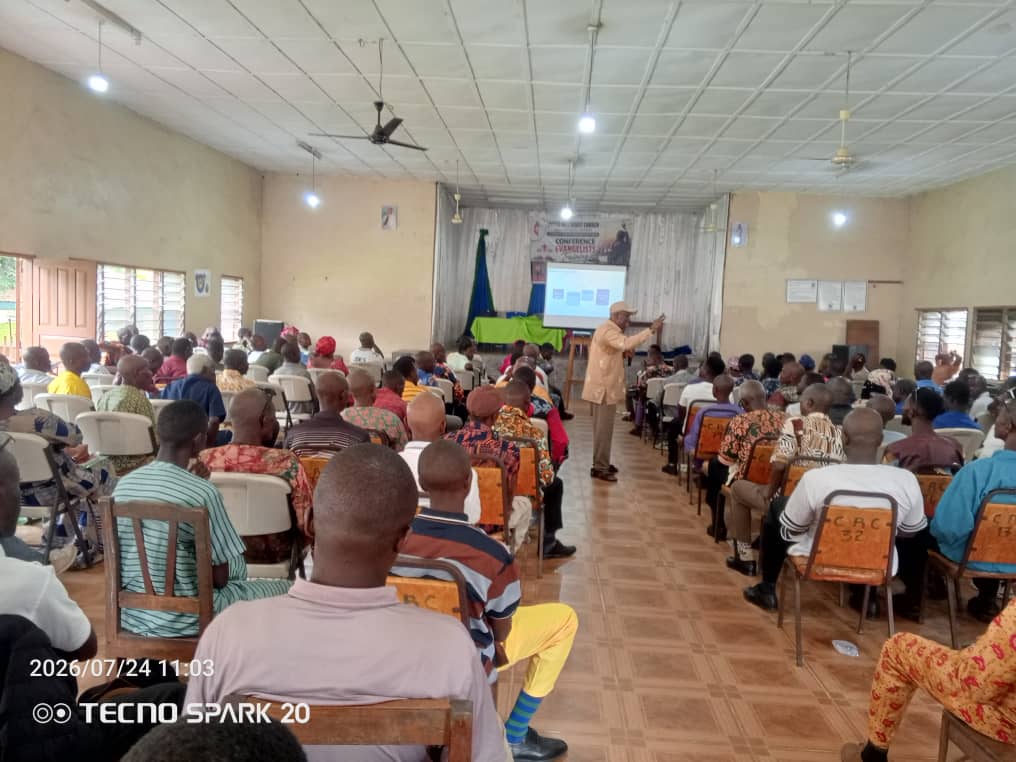
FREETOWN, Sierra Leone – The United Methodist Church (UMC) Sierra Leone Annual Conference has graduated a new cohort of Evangelists and church leaders following the successful completion of an intensive ministerial certificate training programme designed to strengthen leadership, pastoral ministry, and evangelism across the Church.
The programme, which forms part of the Annual Conference’s commitment to continuous ministerial education, equipped participants with practical and theological skills to meet the demands of contemporary Christian ministry.
Certificates were awarded after the completion of the following modules: Communication Skills, Preaching Practicum, Gender-Based Violence and Child Right Acts, Fundraising Strategy, Church Planting, Church Administration, Contextual and Contemporary Evangelism and Preaching, Homiletics, Christian Ethics, Hermeneutics, Discipleship and Stewardship.
Addressing the graduates during the closing ceremony, the District Superintendent Rev. Winston A. Ashcroft and other church leaders described the training as a strategic investment in the future of the Church, urging participants to translate the knowledge gained into effective ministry and Christ-centred leadership within their congregations and communities.
They emphasized that today’s ministers are called not only to preach the Gospel but also to communicate effectively, administer the Church with integrity, mobilize resources responsibly, confront social challenges such as gender-based violence, avoid being part of any under age marriage, and lead efforts that promote spiritual growth and community transformation.
The training was facilitated by a team of experienced church leaders and educators, including Rev. Charles T. Ngele, Director of Evangelism; Rev. Francis B. Charley Director of Connectional Ministries; Dr. Victor Massaquoi, Conference Lay Leader; and Rev. Michael T. Gbenday, Conference Secretary of the United Methodist Church Sierra Leone Annual Conference. Drawing on their extensive ministerial and academic experience, the facilitators guided participants through classroom instruction, practical preaching sessions, and interactive discussions that enriched the learning experience.
The curriculum focused on strengthening biblical interpretation, sermon preparation and delivery, ethical decision-making, discipleship, stewardship, evangelism, and church leadership. Participants were encouraged to apply both theological knowledge and practical ministry skills in serving their local congregations and communities.